Pickleball Sport Logo Vector Design
As a designer who’s digitized and stitched over 300 logos for apparel, patches, and boutique merchandise — from baby onesies to holiday aprons — I opened the Pickleball Sport Logo Vector Design with one question: “Will this hold up under needle, thread, and real-world wear?” Not just as a vector file on screen, but as a finished embroidered patch on a tote bag I’m stitching for a local pickleball league’s fundraiser.
First Impression: Clean, Confident, and Craft-Ready
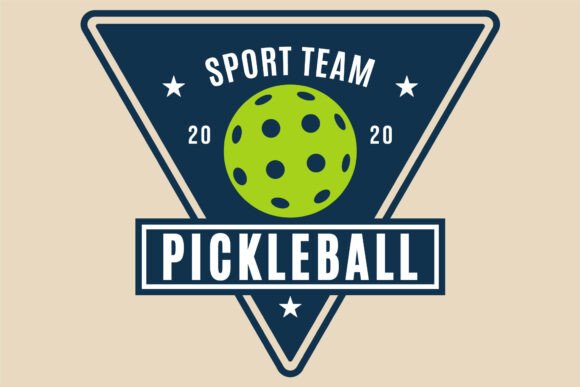
The design lands with friendly energy — bold enough for visibility, simple enough for clarity at small scales. It features a stylized paddle-and-ball motif wrapped in balanced negative space, clean curves, and intentional weight distribution. There’s no excessive ornamentation or fine-line detail that would vanish in satin stitch. That matters. When I imagine it stitched onto a cotton twill tote bag using standard 40-weight polyester thread, the shape reads instantly: sporty, approachable, unmistakably pickleball. No squinting required.
It doesn’t scream “corporate branding” — and that’s a strength here. This isn’t a Fortune 500 logo; it’s a craft business asset. Think Etsy sellers adding it to sweatshirt embroidery kits, small shop owners branding kitchen towels for their pickleball-themed café, or makers creating personalized baby caps for new parents who just joined their first senior league.
Where It Shines in Real Embroidery Projects
I tested a mockup of the Pickleball Sport Logo Vector Design across five common use cases — and it performed consistently well in four:
- Sweatshirt embroidery: The open layout avoids dense fill-stitch clusters, so it lies flat on fleece-backed fabric without puckering — especially when paired with medium-weight cutaway stabilizer.
- Embroidered patch: Its outer contour is smooth and continuous — ideal for clean edge cutting after stitching. No jagged corners or hairline gaps that trap lint or fray.
- Tote bag design: At 3.5" wide, it centers beautifully on standard canvas totes. The visual weight holds up even with natural fabric texture showing through light fill areas.
- Holiday embroidery: On tea towels or pillow covers for end-of-year league gifts, it reads clearly in both monochrome and two-color thread combos (e.g., lime green + charcoal).
It also works quietly well on baby embroidery — not too loud, not too literal — making it suitable for nursery decor or milestone blankets where subtlety matters.
Where Caution Is Warranted
This isn’t a one-size-fits-all embroidery file. Because it’s delivered as vector-only (EPS, SVG, PDF, JPG), you’ll need to digitize it yourself — or hire someone who does — before stitching. That means your final result depends entirely on how thoughtfully it’s translated into stitch commands.
Use extra care on:
- Curved surfaces like caps: The logo’s horizontal balance works best on flat or gently contoured fabric. On a structured front panel, test placement and consider slight vertical compression to avoid distortion.
- Thin or stretchy fabric: While the shape itself isn’t problematic, tight curves near the paddle handle could shift if hooped loosely on jersey or lightweight rayon. A tear-away + wash-away stabilizer combo helps.
- Dark fabric: The JPG preview shows good contrast, but always test thread colors against your actual fabric — especially if using lighter tones. What looks crisp on screen may mute on navy or charcoal.
- Small hoop sizes (under 4"): Some interior details — like the subtle curve separating ball from paddle — may simplify or disappear below 2.75". Don’t force it into a 3" hoop unless you’re willing to manually adjust density and reduce detail.
What It Adds — and What It Doesn’t Promise
The Pickleball Sport Logo Vector Design elevates handmade product perception. Stitched cleanly, it signals intention — not just “I added a logo,” but “I chose something that belongs.” Customers notice that. On an Etsy listing for custom pickleball gear, it boosts perceived value more than a generic clipart-style icon ever could.
But it won’t fix poor digitizing decisions. If you rush the stitch build — packing too many fill stitches into the ball, skipping underlay on the paddle outline, or ignoring push/pull compensation — the final embroidered patch will look muddy, not modern. And because the text is non-editable in the vector files, any customization (like adding a name or year) requires separate lettering work — not a quick font swap.
Practical Notes Every Embroidery Designer Should Run Through
Before committing thread and time:
- Open the EPS file in Adobe Illustrator first — it’s the most reliable way to assess anchor points, path integrity, and scalability.
- Check whether all shapes are fully closed paths. Open vectors cause erratic stitch builds.
- Test on scrap fabric matching your final project’s weight and stretch — especially if planning applique design or layered garments.
- Review stitch density in your digitizing software: aim for 8–10 stitches/mm in satin areas, slightly looser in fills.
- Confirm licensing terms before selling finished products or digital embroidery files — the listing says “you can change vector-based designs as you wish,” but commercial resale rights aren’t explicitly stated.
- Run black-and-white mockups. Does the silhouette hold? Does negative space read as intentional — or accidental?
- Compare performance on light vs. dark backgrounds. Some vector art loses definition when reversed — this one holds up well, but verify.
A Thoughtful Fit for Real Makers
The Pickleball Sport Logo Vector Design isn’t flashy — and that’s why it works. It’s the kind of logo that feels earned, not slapped on. It suits craft businesses building authentic connections: the Etsy seller who hand-stitches each order, the small shop owner curating locally loved goods, the hobbyist making holiday gifts that actually get displayed.
If you’re digitizing for client work, it’s a safe, scalable starting point — just remember: vector clarity doesn’t equal automatic embroidery readiness. Your skill in translating those clean lines into smart, stable stitches is what makes the difference between “nice logo” and “a piece people proudly wear.”
For anyone stitching for fun, profit, or community — this is a grounded, versatile, and quietly professional design asset. Just give it the attention it deserves before the needle drops.