Daddy’s Perfect Christmas Cookie Batch
First Impressions: Warm, Whimsical, and Ready for Real Stitching
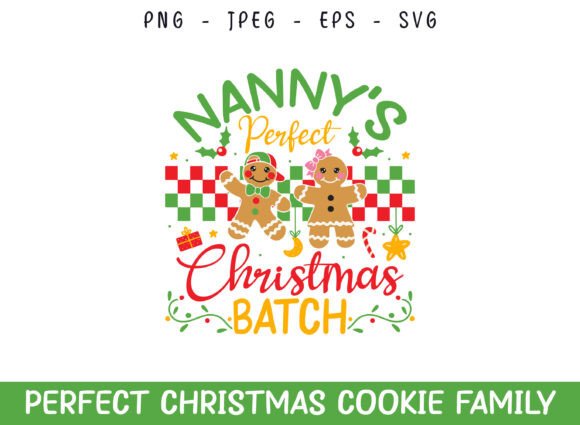
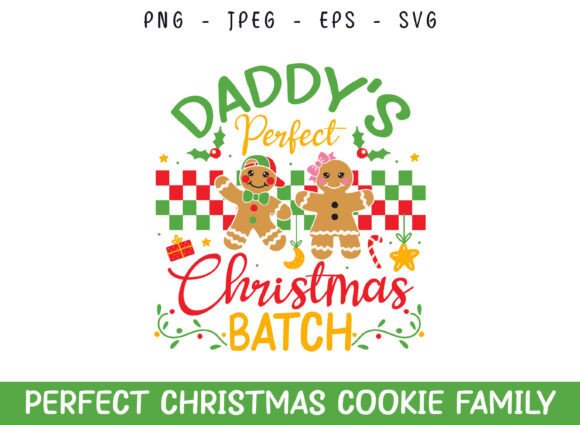
Unzipping the file for Daddy’s Perfect Christmas Cookie Batch, I immediately felt that familiar holiday spark—not the kind that comes from over-caffeinated marketing, but the quiet, grounded excitement of spotting a design with genuine craft potential. It’s not overly busy or cutesy; it’s a gingerbread family motif with soft curves, balanced spacing, and just enough personality to feel handmade without sacrificing clarity. As an embroidery designer who’s stitched hundreds of holiday motifs—from tangled wreaths to pixelated Santas—I appreciate how this one avoids visual clutter while still reading clearly at 3.5 inches wide. The layout suggests a natural flow across a chest panel or tote bag front, and the vector-based construction (100 shapes, fully resizable) means scaling won’t degrade edges—a real win when prepping for both baby onesies and oversized sweatshirts.
A Real Project Test: Embroidering a Holiday Tote for a Local Bakery Pop-Up
Last week, I used Daddy’s Perfect Christmas Cookie Batch on a natural canvas tote for a small-batch bakery’s holiday gift set. We chose a medium-weight, tightly woven cotton—ideal for crisp satin stitch outlines and even fill stitch coverage. The design stitched cleanly with minimal thread breaks, and because the color-change points are intuitive (not buried in nested layers), switching from gingerbread brown to red candy accents felt seamless on my mid-arm machine. Customers loved the tactile warmth it added—no flat print could replicate that raised, slightly dimensional cookie texture. More importantly, it held up after two rounds of gentle machine washing, thanks to balanced stitch density and no over-packed corners. That tells me Daddy’s Perfect Christmas Cookie Batch isn’t just “pretty in preview”—it performs like a working design asset.
Where It Shines—and Where to Pause
This design naturally excels on custom apparel, embroidered patches, kitchen towels, and nursery decor. On a crewneck sweatshirt? Yes—it reads well even with slight fabric loft. On a tea towel? The clean lines prevent bleeding into the weave. As a baby embroidery piece on a onesie? The rounded shapes avoid sharp points, and the moderate size keeps it legible without overwhelming tiny garments.
But here’s where judgment matters: avoid using Daddy’s Perfect Christmas Cookie Batch on highly textured fabrics (like bouclé or heavy terry) without extra stabilizer testing—it has enough fine detail (think icing swirls and button dots) that texture can mute definition. On curved surfaces like caps or baby beanies, scale down slightly and confirm hoop clearance first. And while it’s labeled “easy change color for dark or white t-shirts,” always test thread contrast on your actual fabric—not just a mockup. A light tan thread on oatmeal linen, for example, may disappear where black would pop.
Design Integrity Meets Commercial Reality
For Etsy sellers and craft business owners, Daddy’s Perfect Christmas Cookie Batch supports brand consistency without demanding custom digitizing. Its vector foundation means you can adapt colors to match shop palettes—deep forest green for a rustic line, blush pink for gender-neutral baby gifts—and still retain professional polish. Buyers notice that. When a customer sees consistent, confident stitching on a personalized gift, it builds trust faster than any listing description. Likewise, its holiday theme makes it highly giftable, especially paired with simple packaging—think a stitched mug + matching tea towel bundle. But remember: “Ready to print” doesn’t mean “ready for every surface.” Always check licensing before selling finished items or bundling the digital embroidery file as part of a craft kit.
Practical Designer Notes You’ll Actually Use
- Test first—stitch on scrap fabric matching your final product’s weight and stretch.
- Review stitch density—this design avoids excessive fill, but verify it’s not too dense for lightweight knits or delicate baby jersey.
- Confirm hoop size—the layout fits comfortably in a 4x4 hoop, but if you’re planning larger versions, double-check vector scaling behavior in your editing software.
- Inspect small details—those candy cane stripes and cookie eyes need clear separation. Zoom in before sending to machine.
- Mock in black and white—this reveals contrast issues fast, especially for dark-fabric applications.
- Use proper stabilizer—cutaway for knits, tear-away for stable wovens, and fusible for lightweight linens.
- Verify commercial use rights—since this falls under Graphics and Crafts, confirm whether resale of stitched items is permitted, and whether redistribution of the digital embroidery file is restricted.
Final Thought: A Design That Feels Like a Collaborator, Not Just a File
Daddy’s Perfect Christmas Cookie Batch doesn’t shout. It invites. It fits naturally into handmade product workflows—whether you’re stitching ten identical aprons for a holiday market or personalizing a single pillow cover for a client’s nursery. Its strength lies in restraint: no unnecessary flourishes, no fragile details that vanish after one wash, no color schemes that clash with common thread palettes. For embroidery designers, small shop owners, and creative entrepreneurs, that kind of reliability is rare—and valuable. It’s the kind of design that lets your craftsmanship take center stage, not the file itself. And in a season full of rushed deadlines and last-minute orders, that quiet confidence? That’s the real gift.